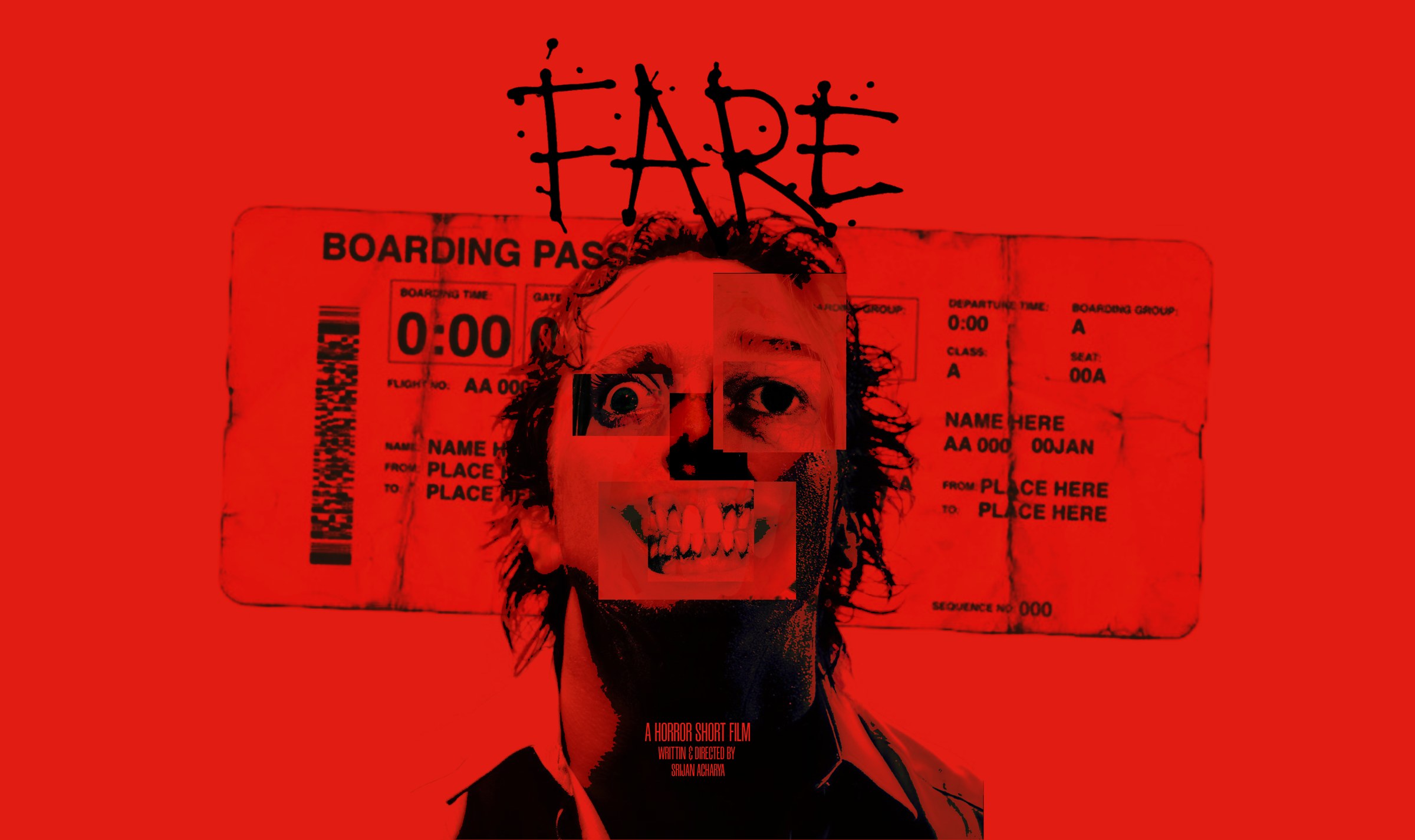
Fare — a horror short film
Written & directed by Srijan Acharya · Produced by Caden Chung · Cinematography by Ronan Monosuke
A sleepless rideshare driver picks up someone wearing a face buried in his past — pulling him toward a string of missing riders as his identity fractures.
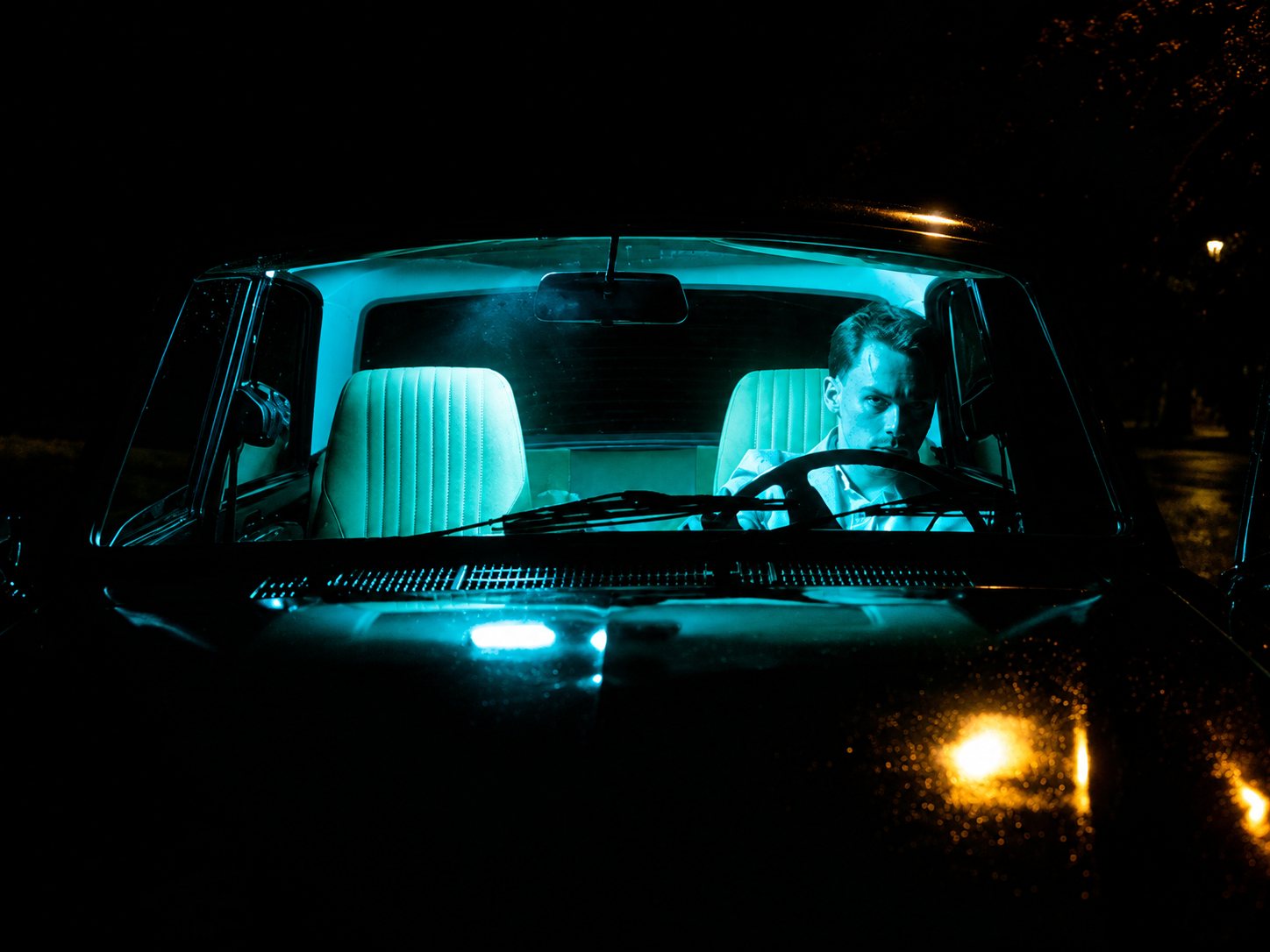
He makes his living being cancelled. A profile picture disturbing enough that nobody lets him arrive — the ride dies, the fee clears, and he never has to speak to a soul. It works every night. Until the night a fare won't cancel.
The passenger in his back seat knows things a stranger shouldn't. Riders have been vanishing along these roads — their posters fading on every light pole — and the route keeps pulling him past the last streets he recognizes, toward a tunnel that isn't on any map. He can still turn around. He keeps telling himself he can still turn around.
Somewhere past the tunnel, something is wearing his face better than he does.
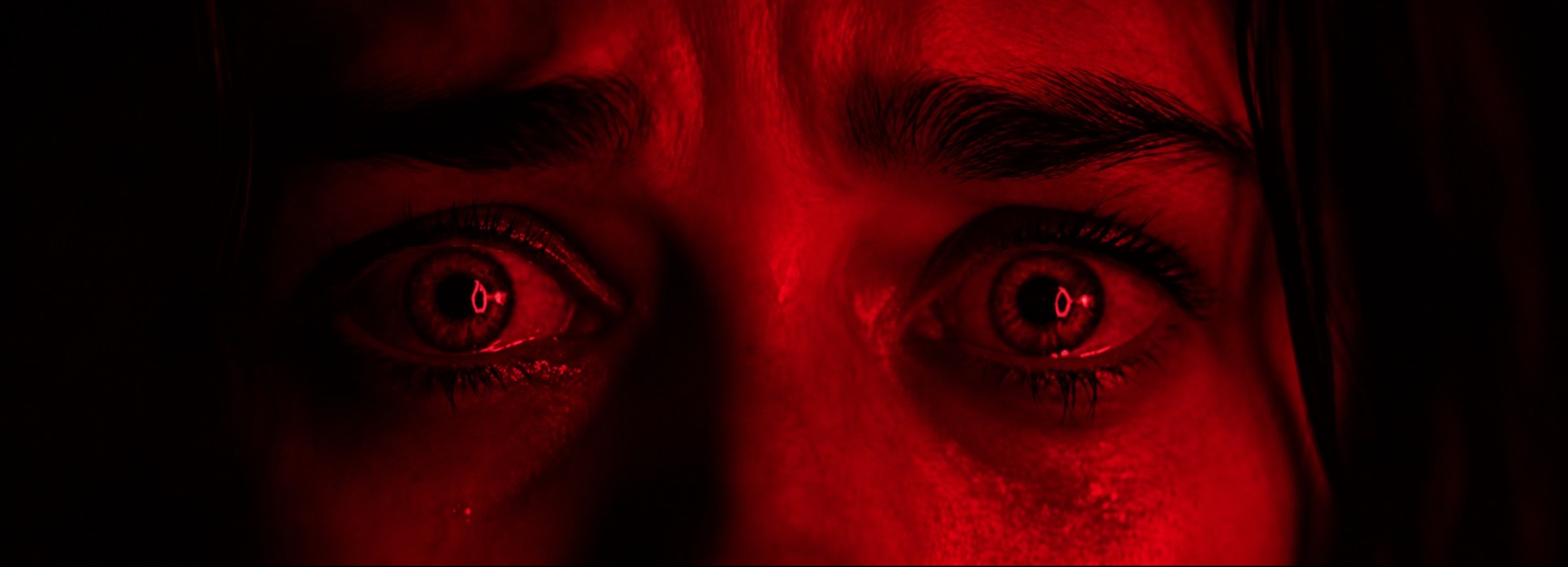
FARE explores one of humanity's oldest fears through a modern lens: the loss of identity. In a world increasingly defined by profiles, photographs, ratings, and perception, the line between who we are and the versions of ourselves we project has never been thinner. The film asks what happens when that fabricated identity begins to take on a life of its own.
Through surreal horror, liminal spaces, and psychological dread, FARE explores the terror of watching your identity fracture until the person staring back at you is no longer someone you recognize. The horror relies on atmosphere, practical effects, distorted human imagery, and escalating dread rather than traditional jump scares.
The film progresses through three distinct visual worlds, each with its own light, palette, and logic — a slow descent from the familiar into the impossible.
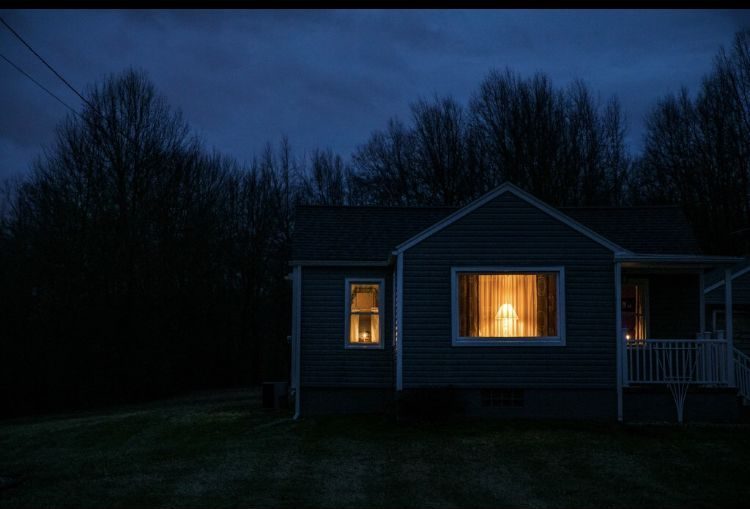
Familiar, intimate, but quietly deteriorating. Lamplight, clutter, the residue of a life on pause.
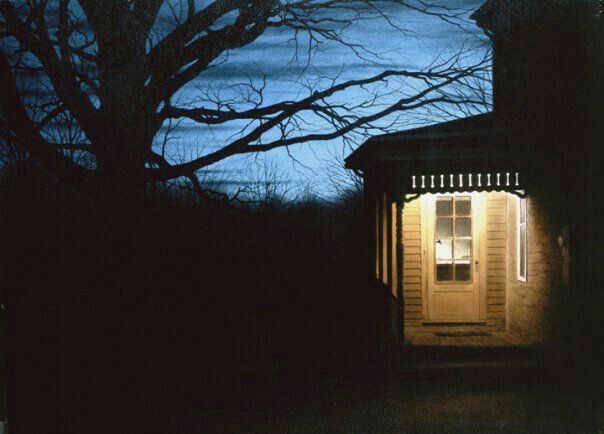
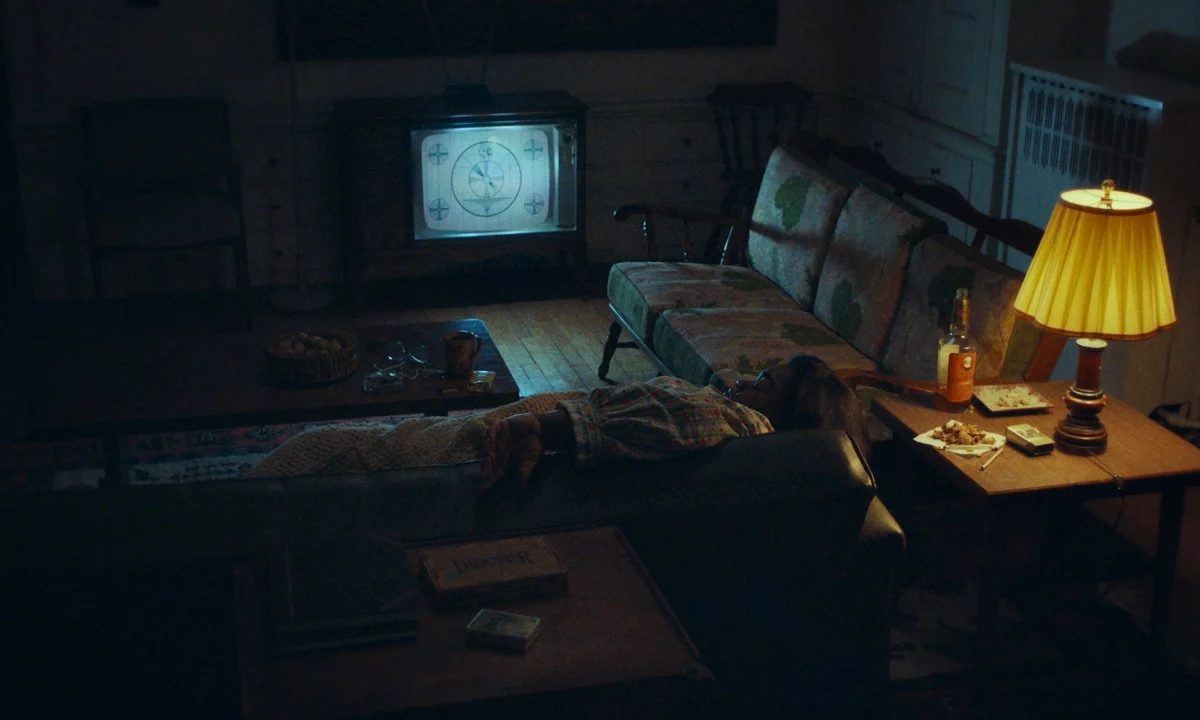
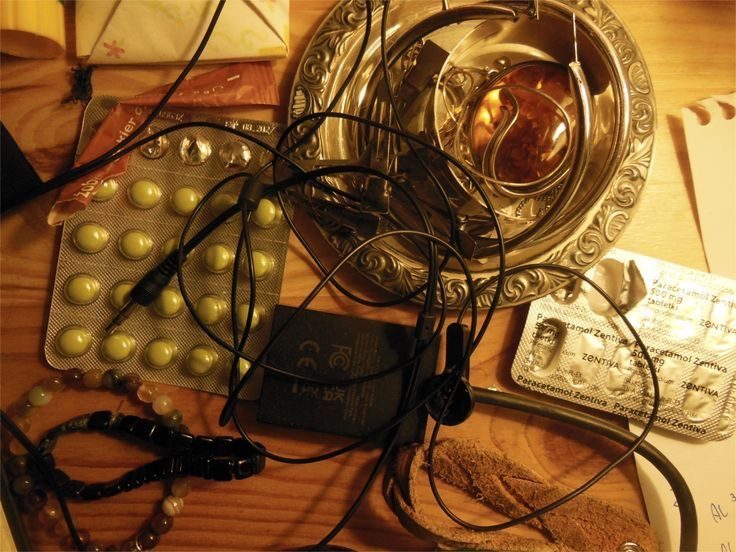
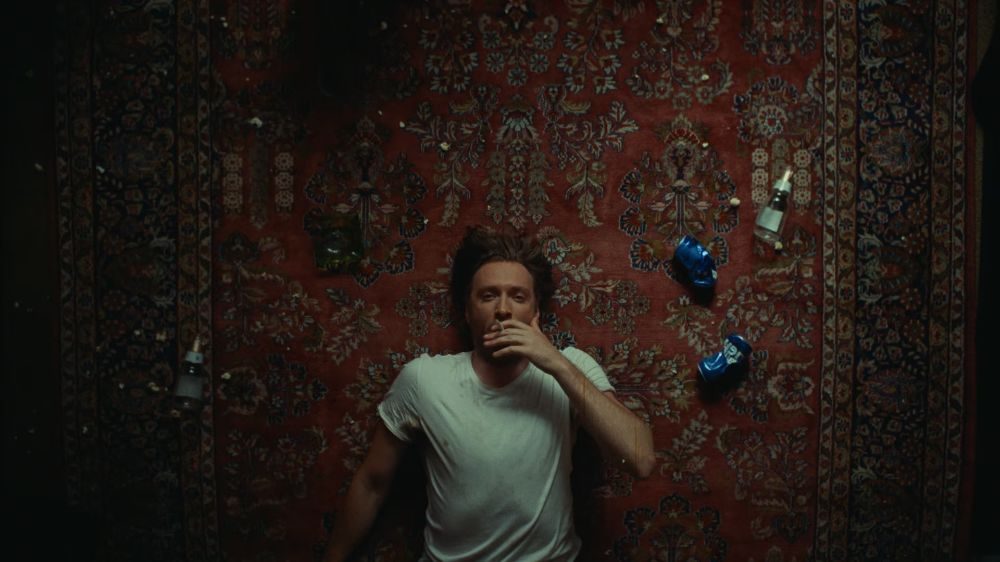
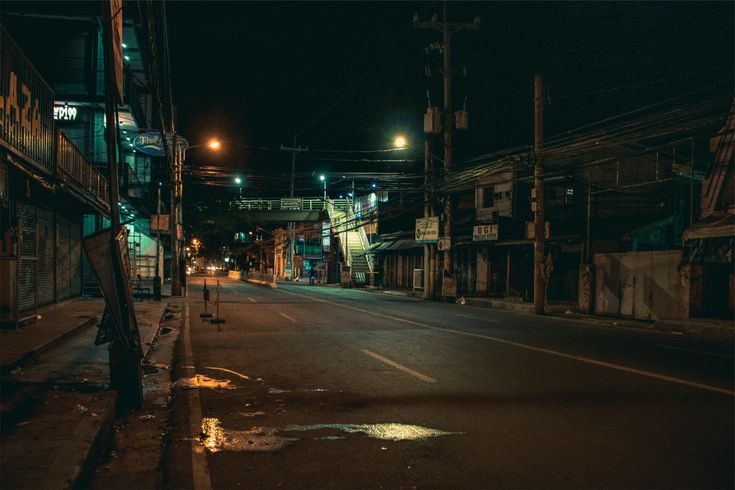
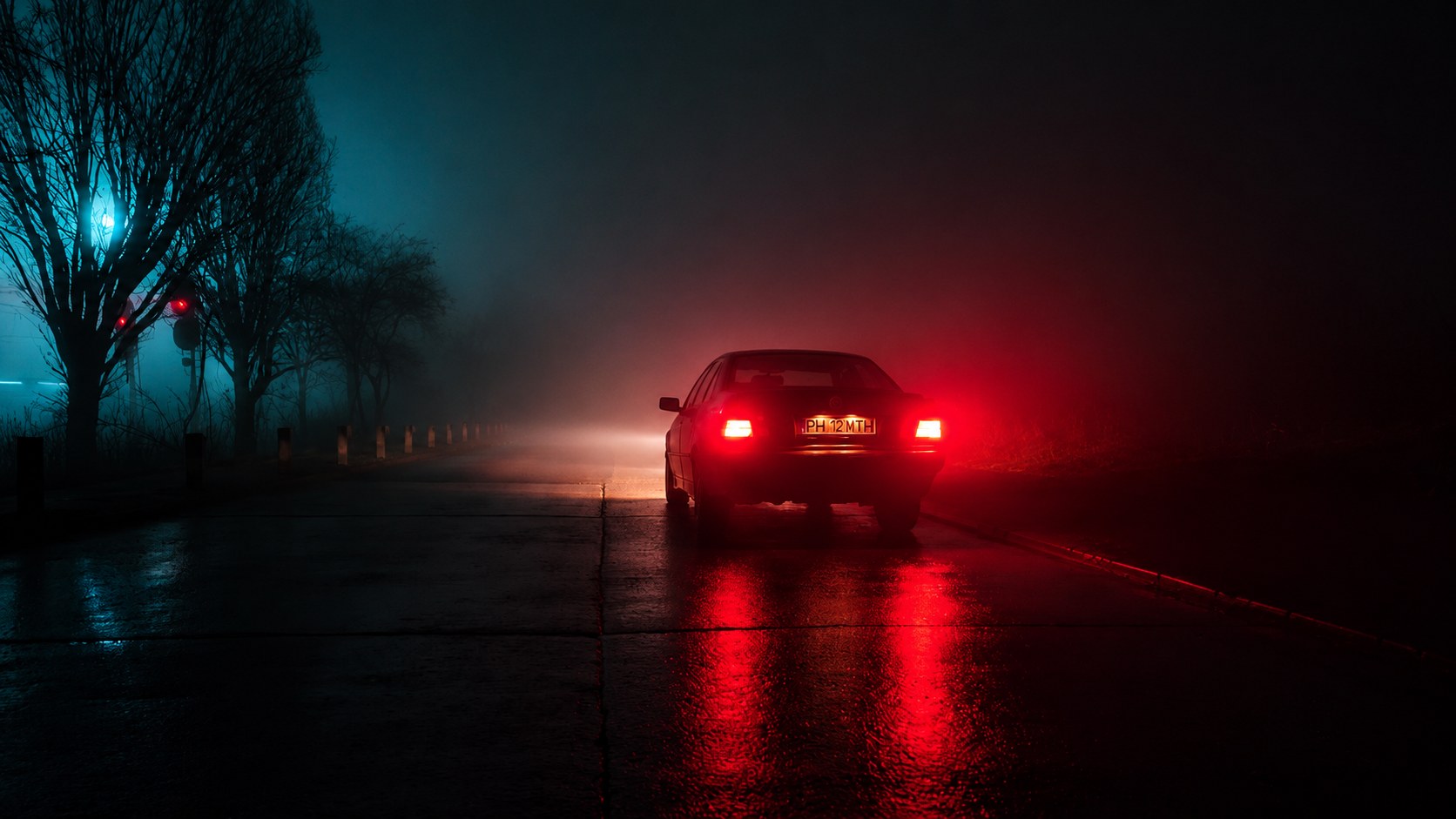
Rain-soaked highways, empty intersections, and growing isolation. The city thins out until only the route remains.
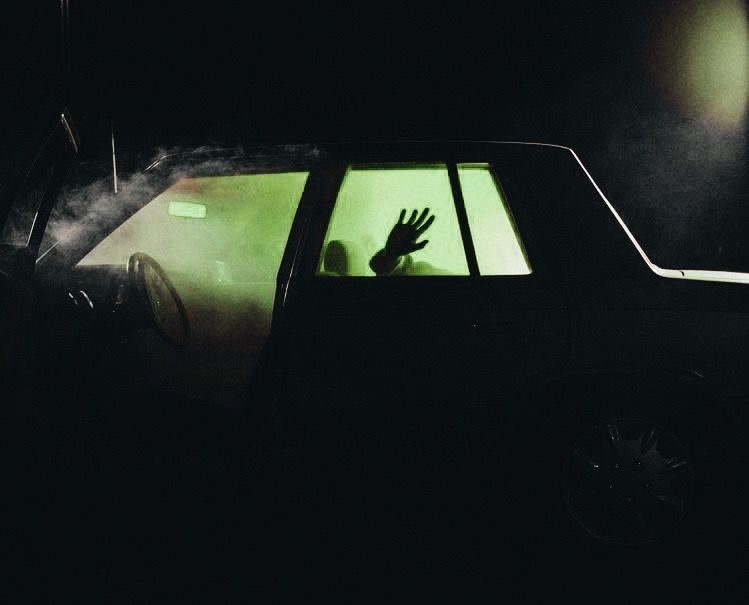
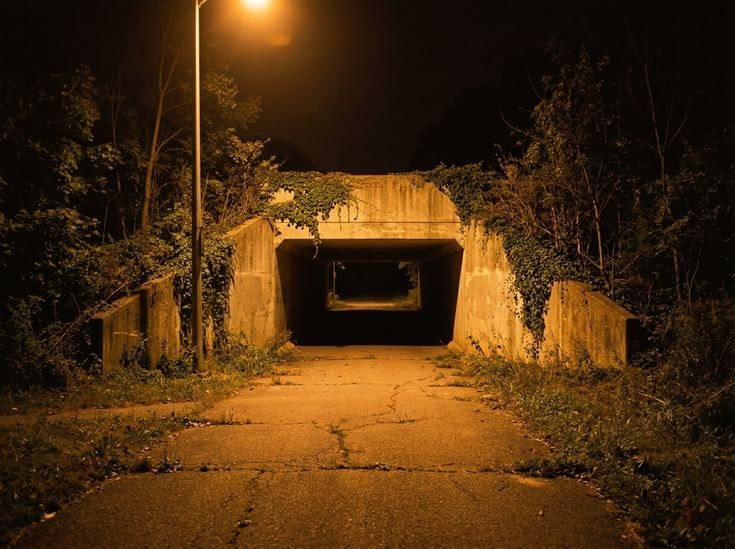
Endless repetition and dreamlike logic where reality no longer exists. Liminal corridors, flickering light, and the faces that appear in it.
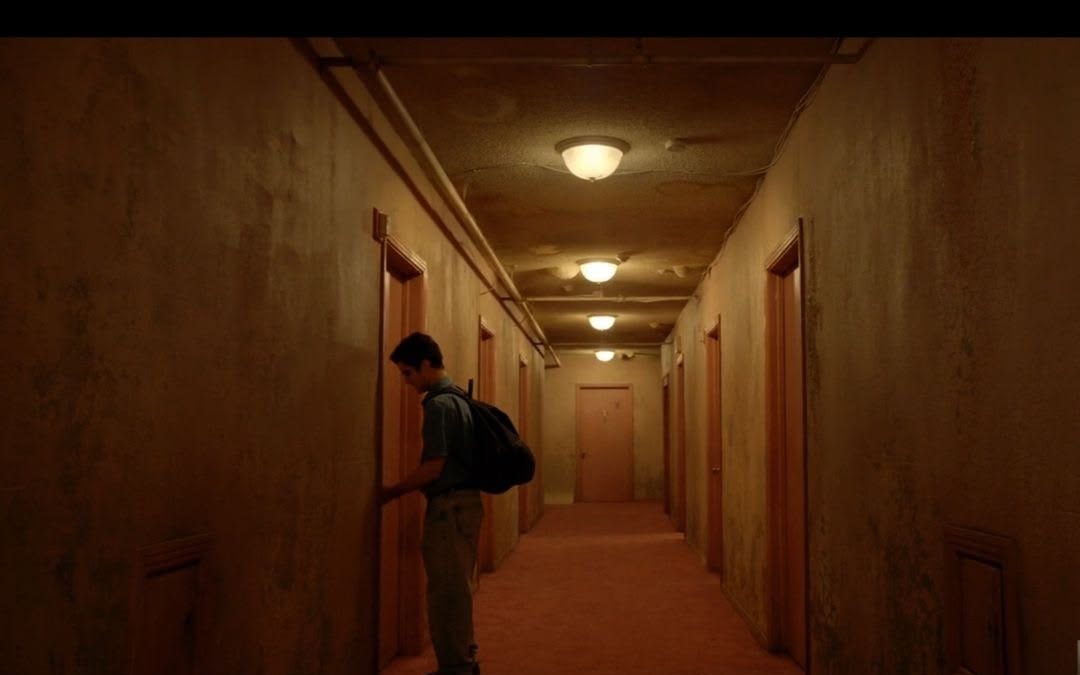
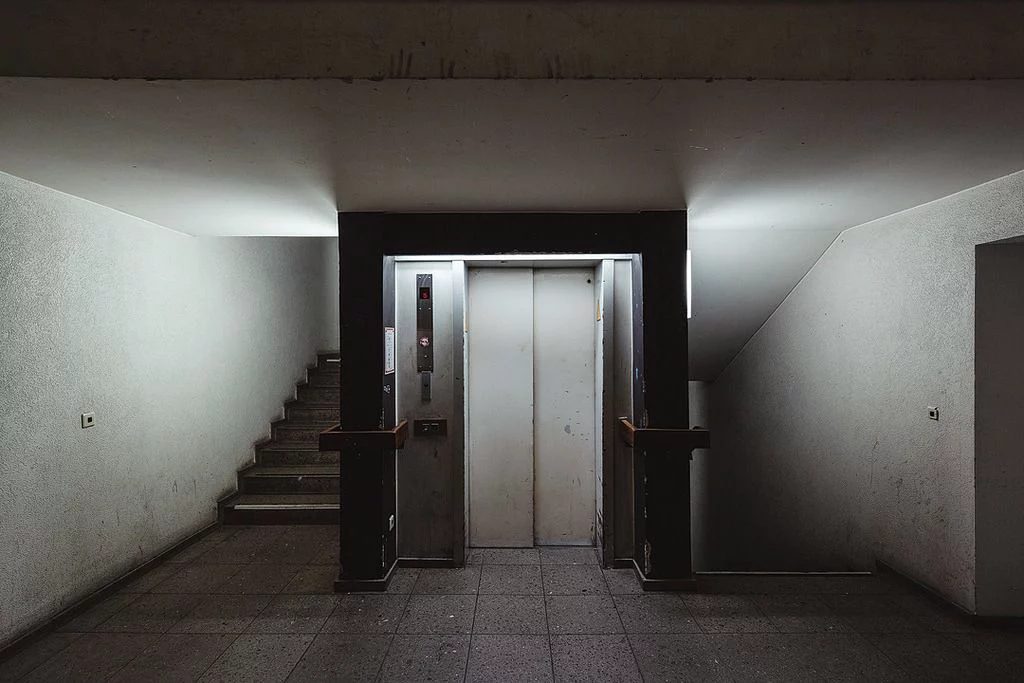
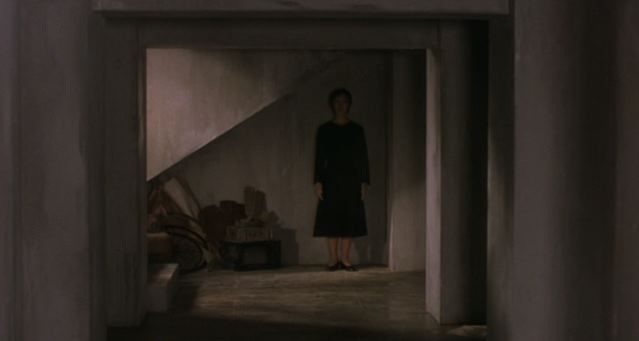
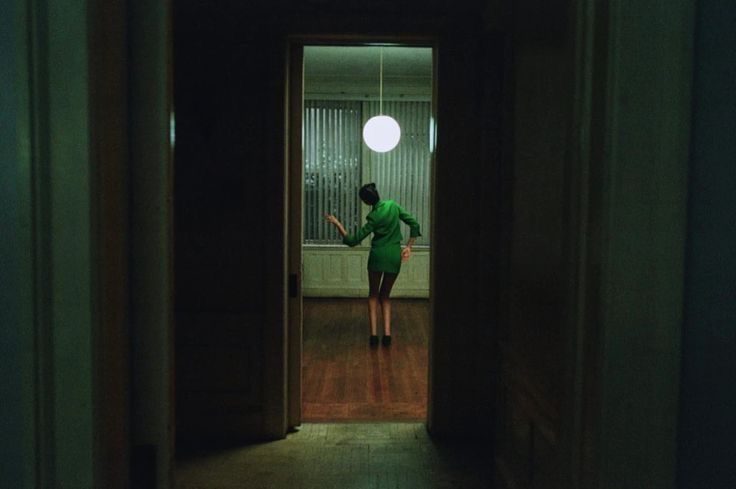
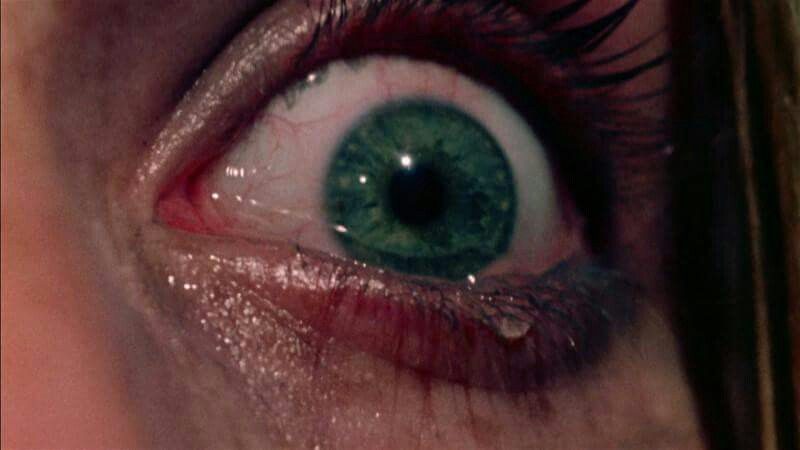
Oppressive close-ups against expansive, liminal wides — intimate framing that traps the viewer with the protagonist, and empty space that invites the eye to search every corner of the frame.
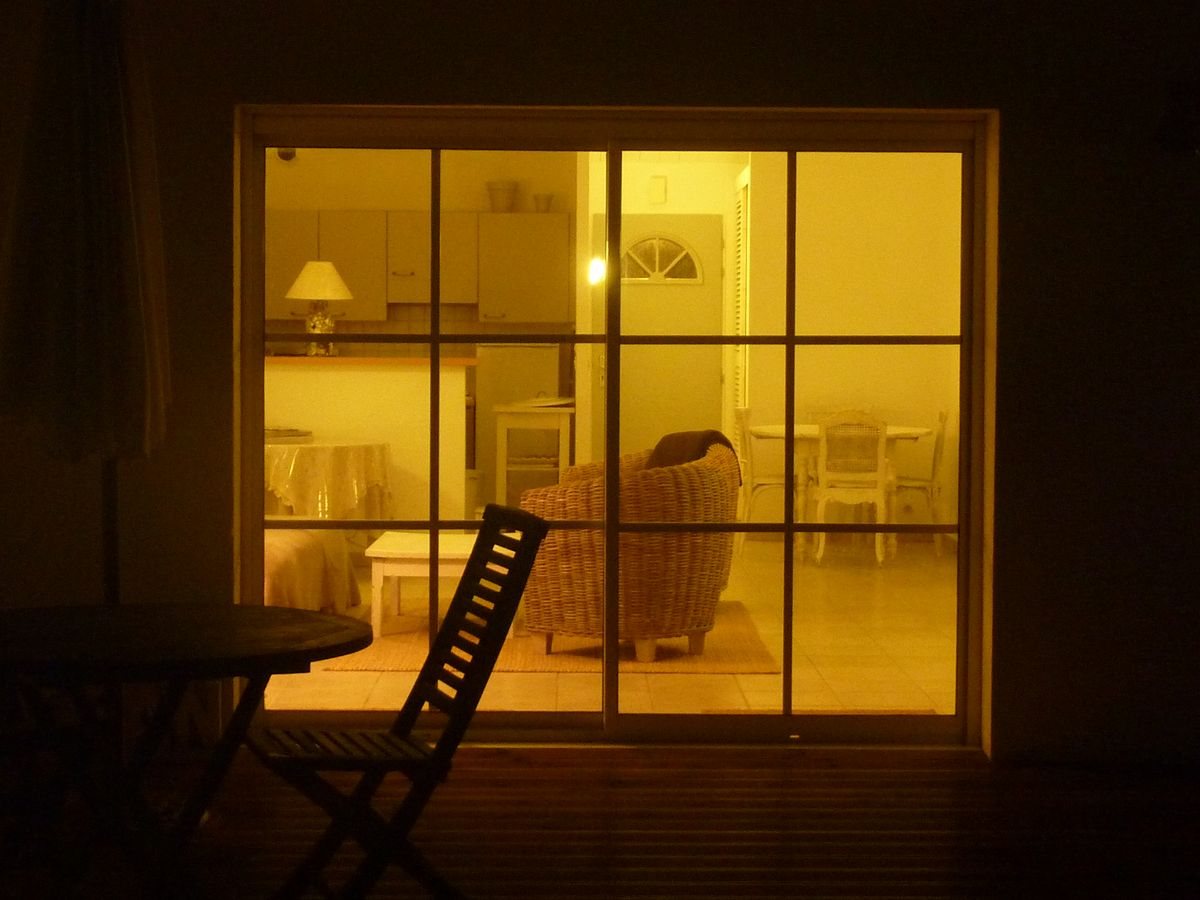
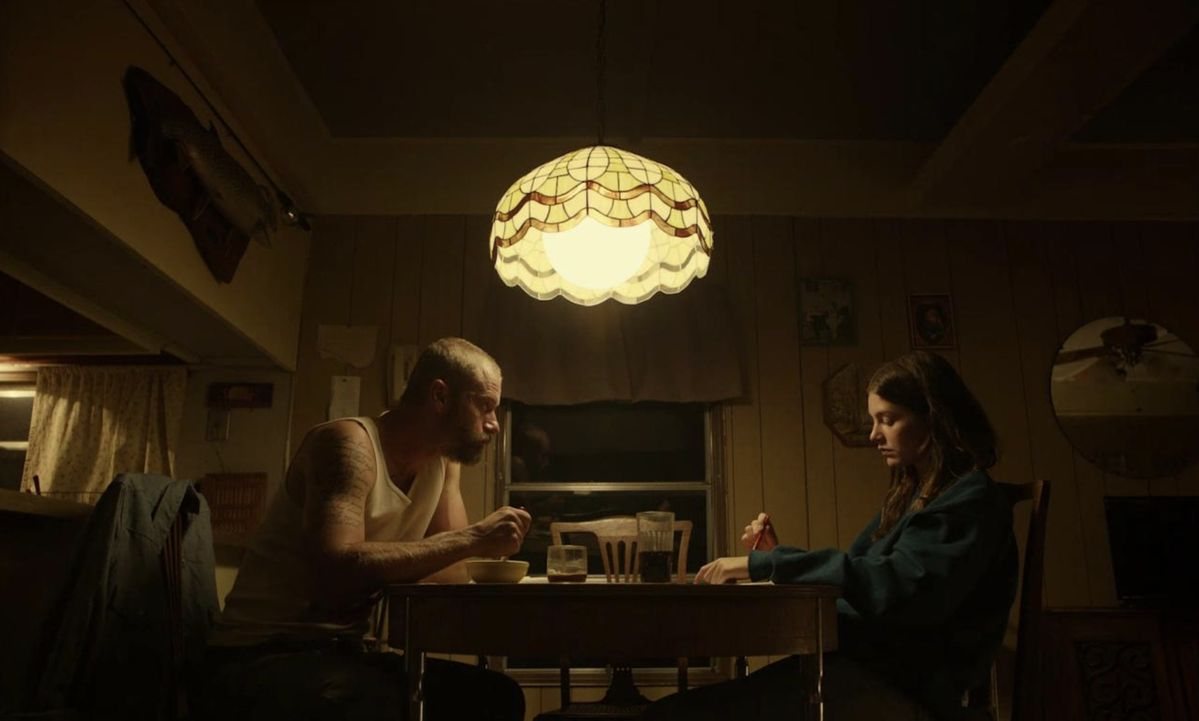
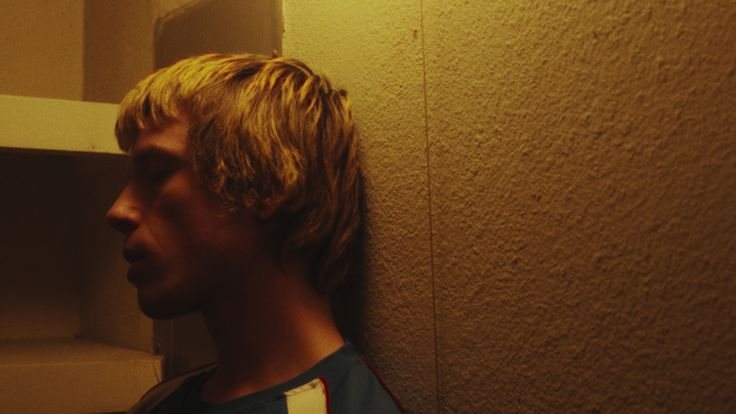
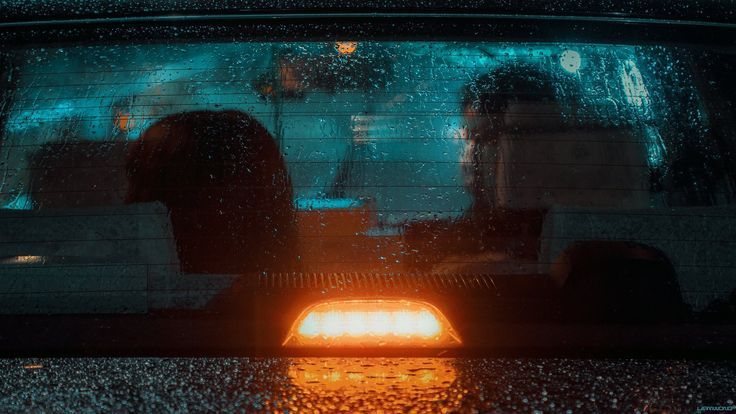
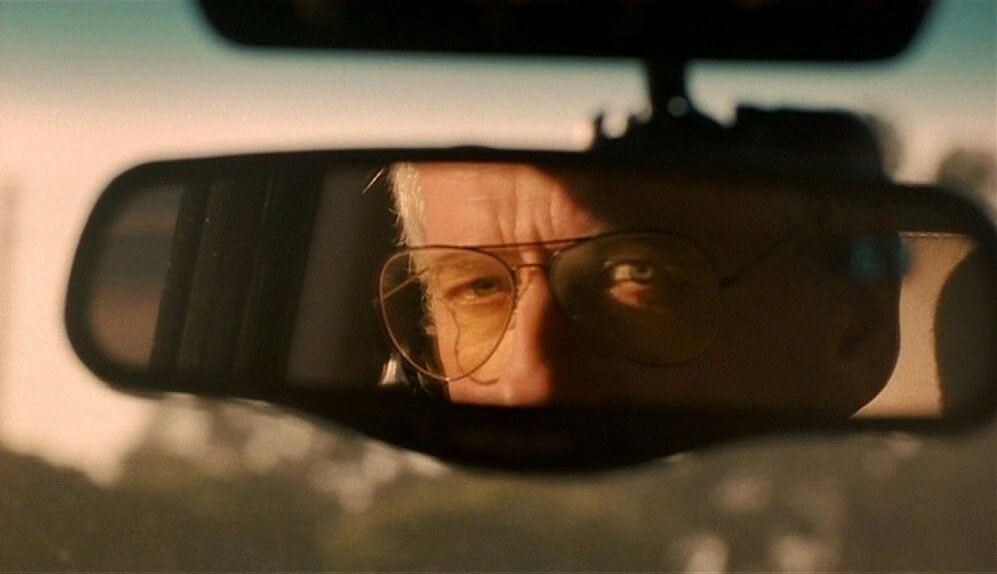
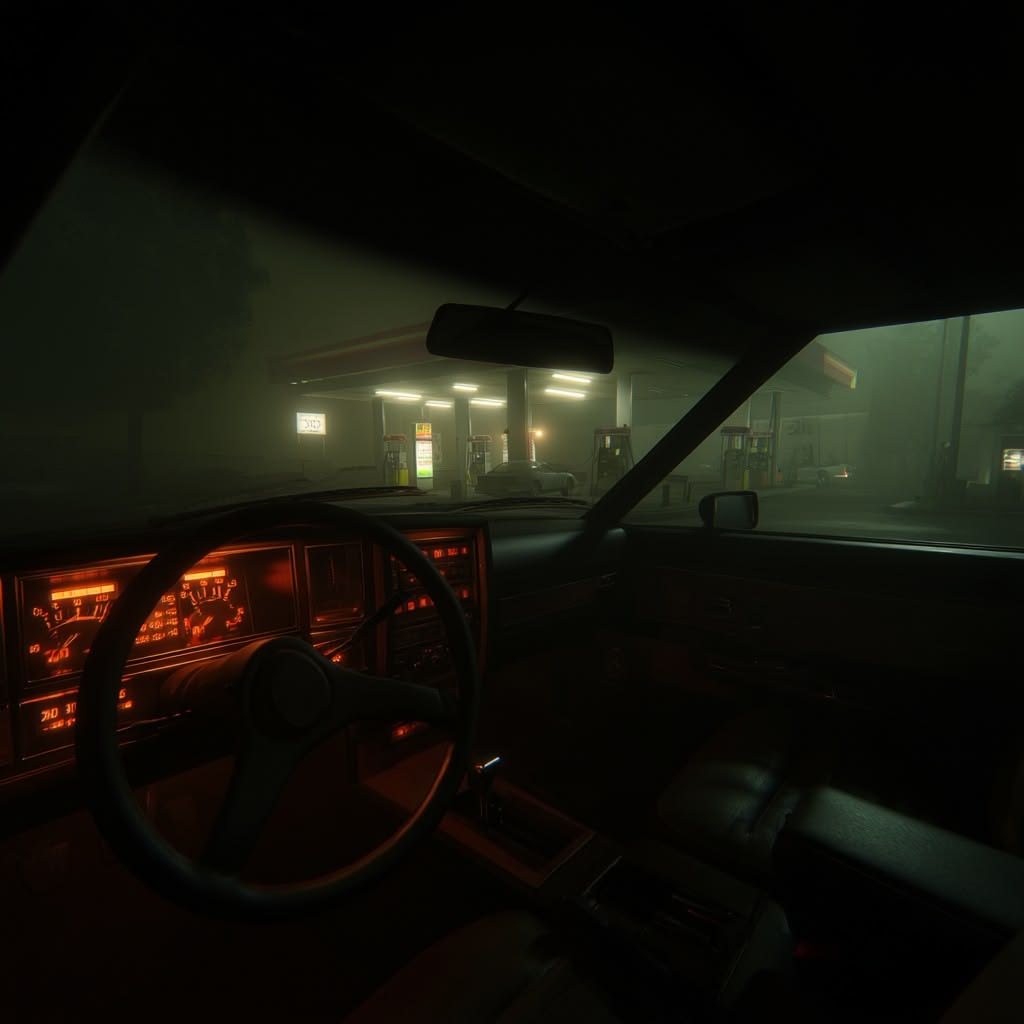
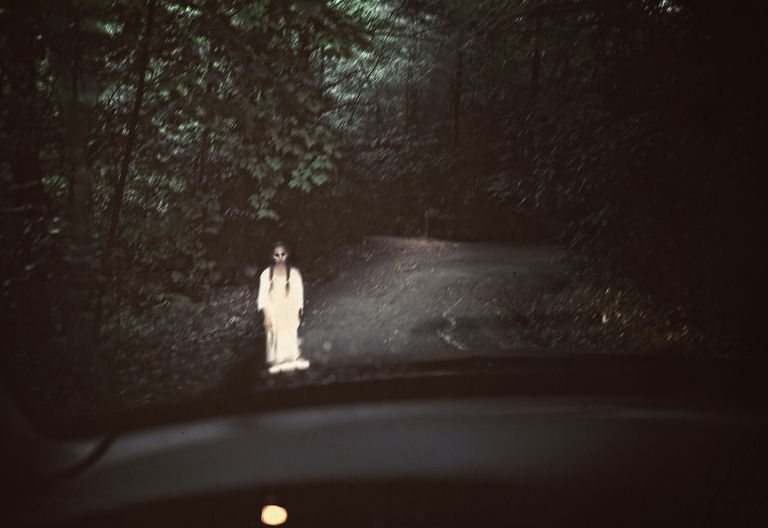
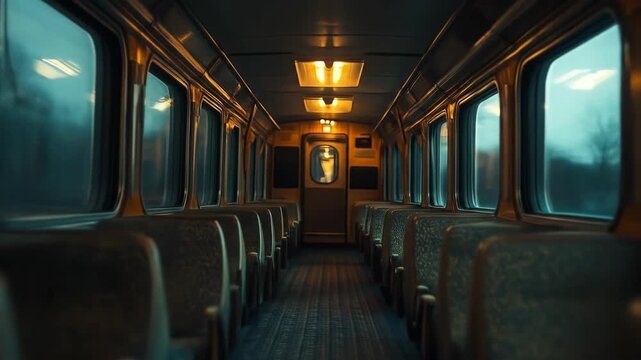
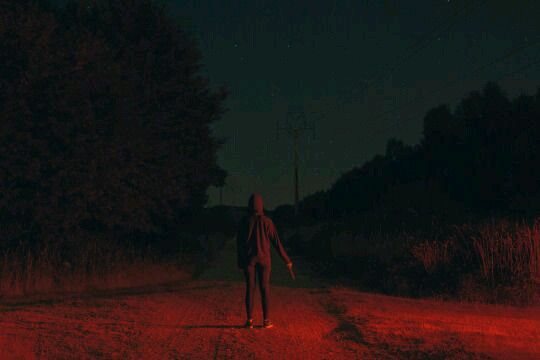
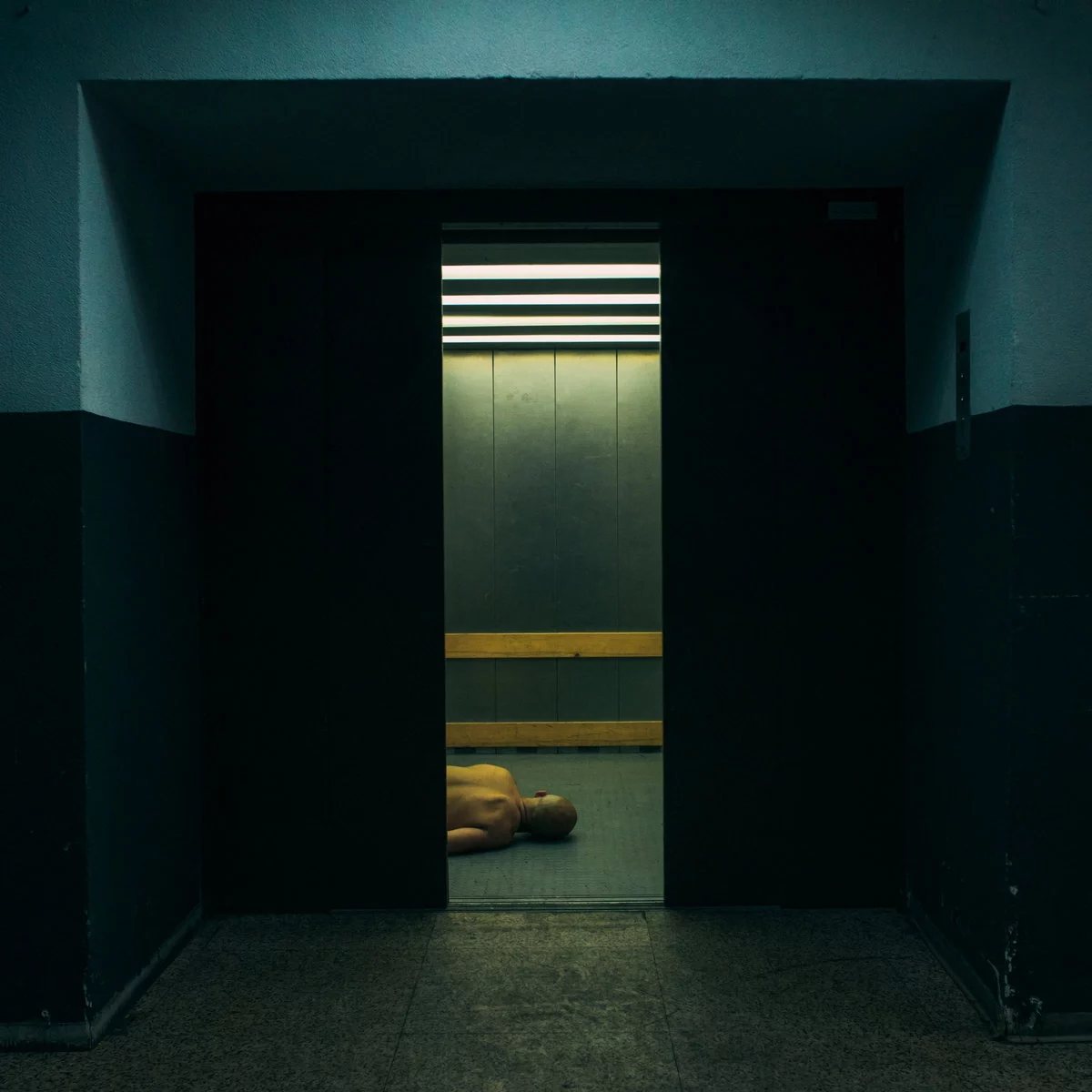
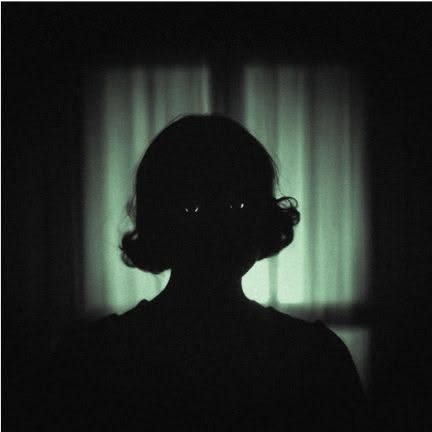
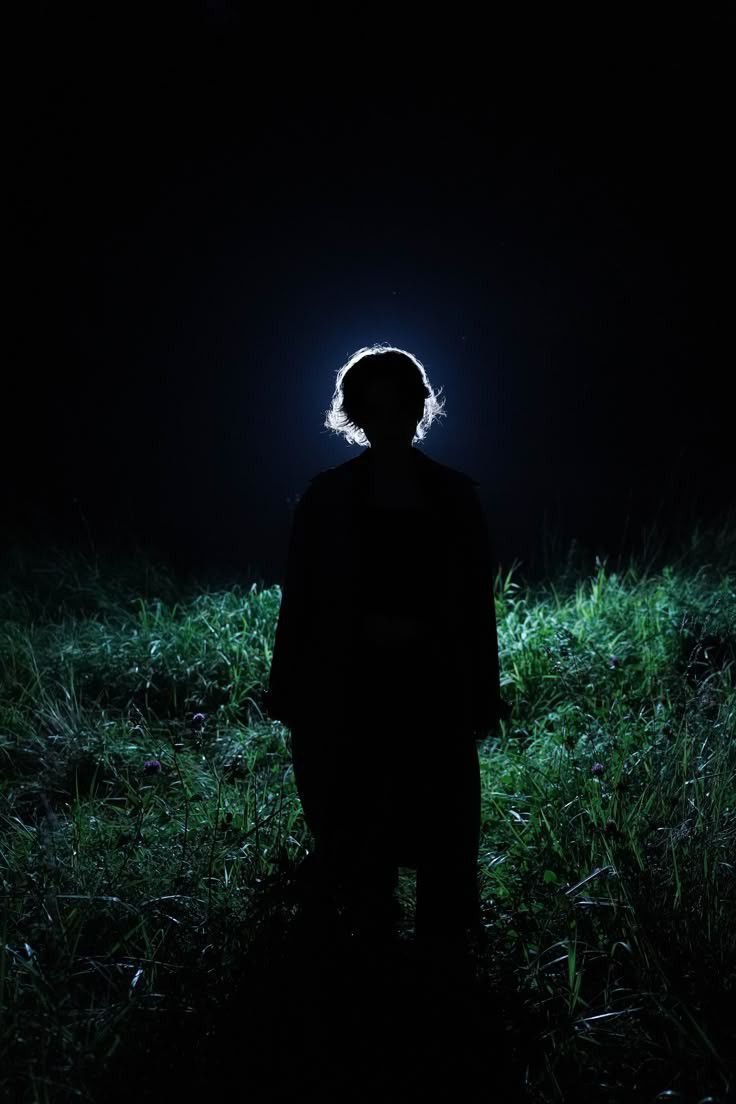
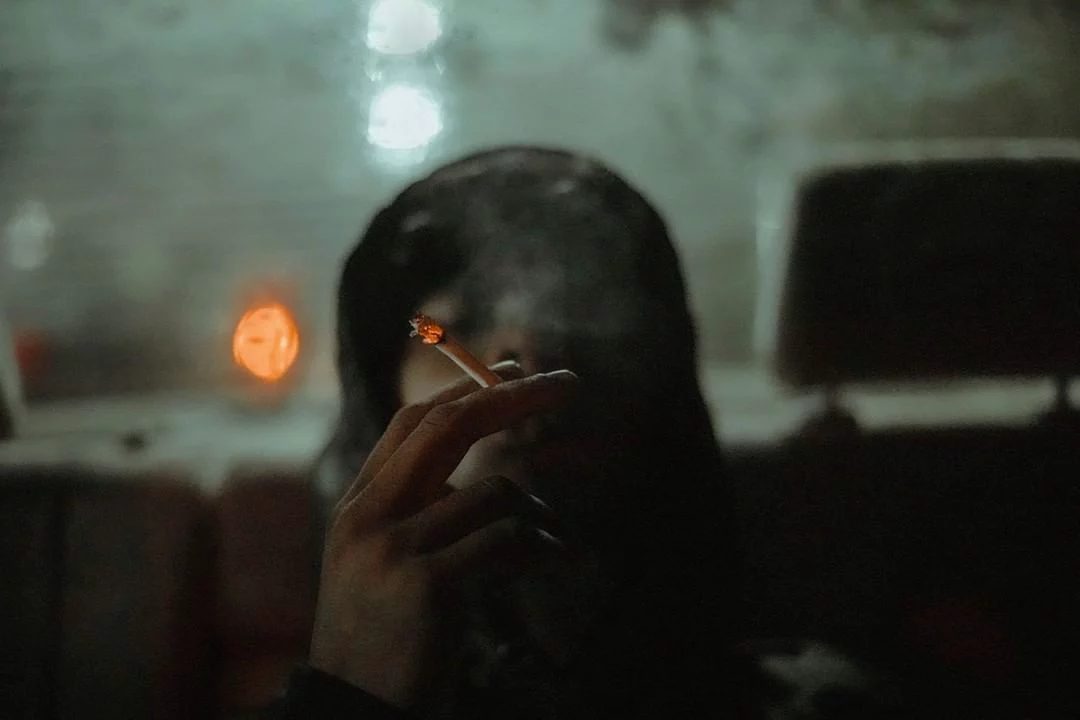
Reference imagery. Frames drawn from contemporary horror cinema and found photography, curated for tone — not production footage.
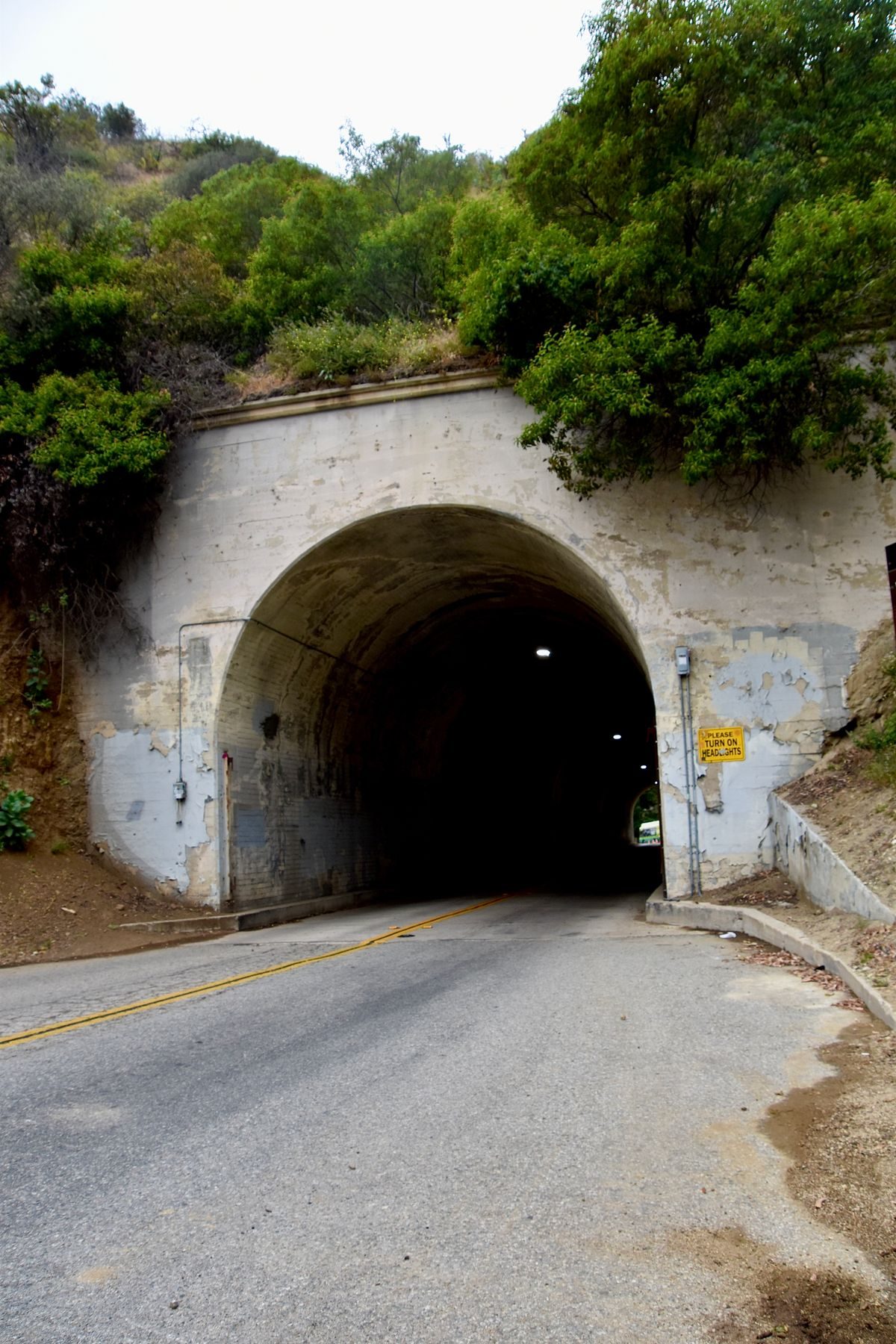
The threshold of the film — the point where the road ends and the impossible begins. Scouted north of Los Angeles; shot at the mouth at night with practical sodium fixtures.
Location scout photograph — Srijan Acharya.
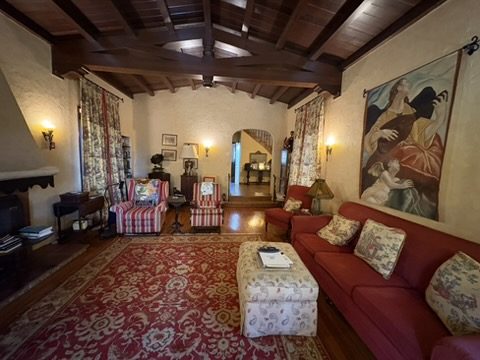
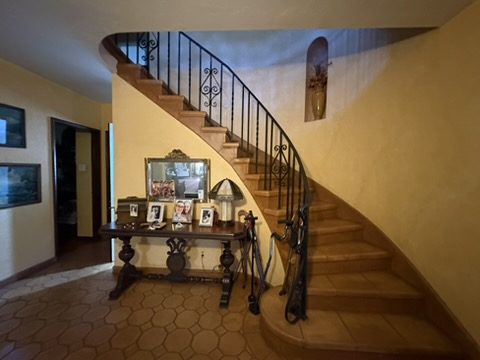
Ellis's world before the fare: warm, lived-in, and quietly wrong. Practical interiors give the Home world its tungsten palette and its clutter — the coffee table where the film's first reveal hides in plain sight.
Location scout photographs — Srijan Acharya.
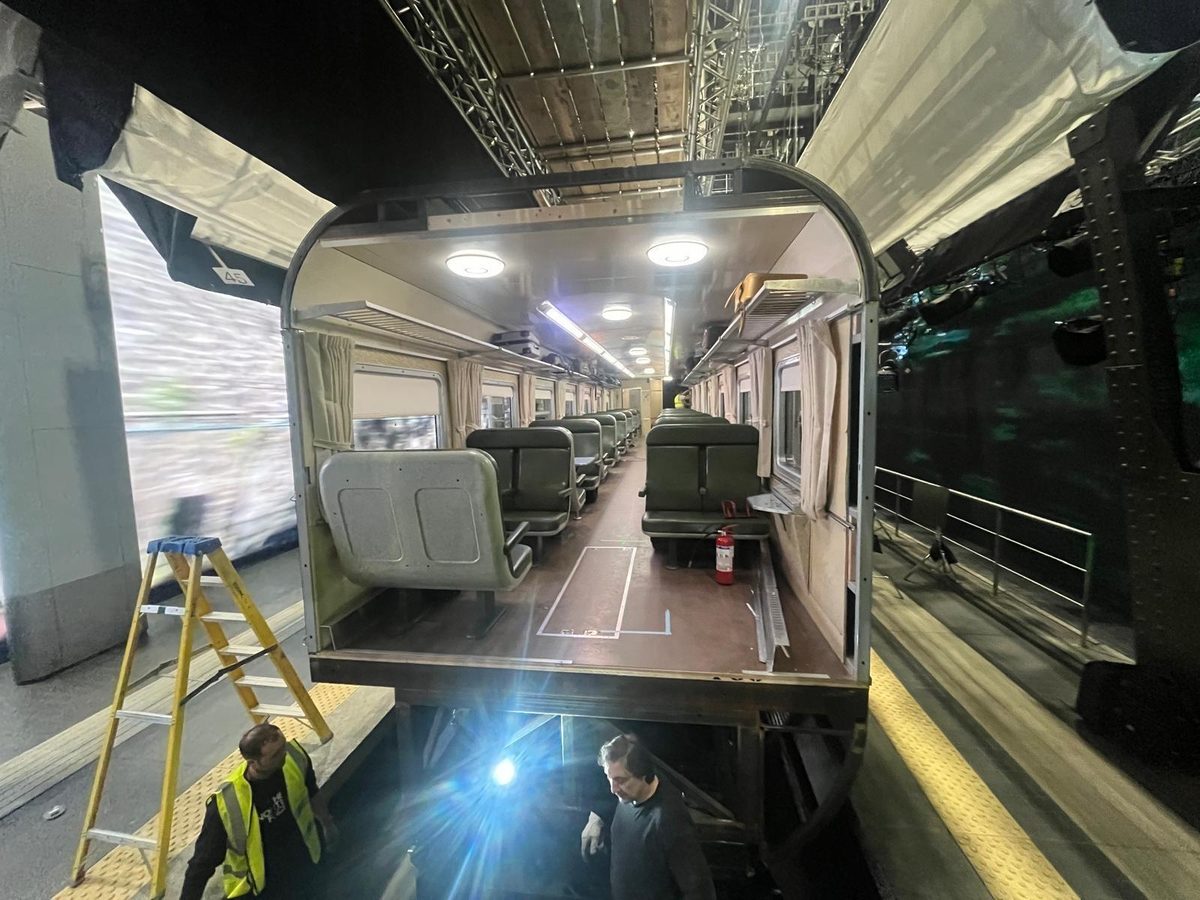
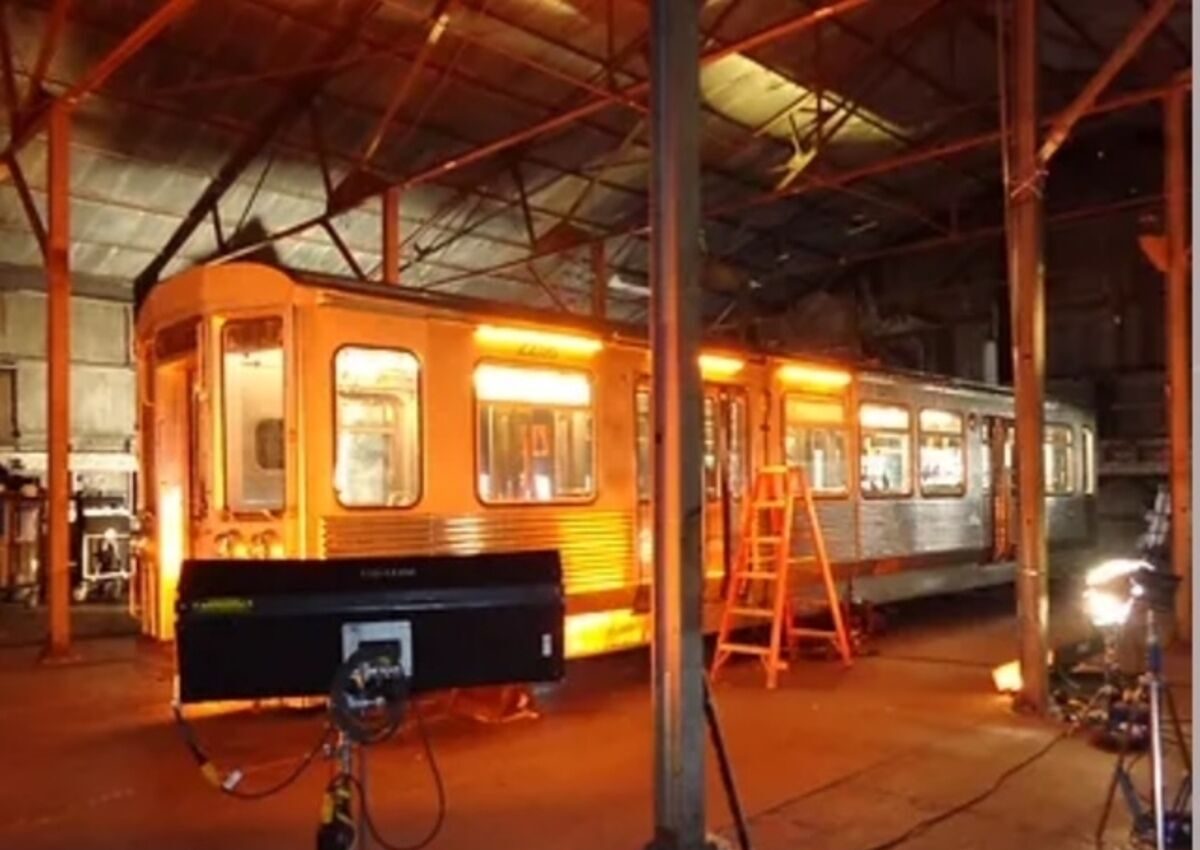
The film's third world shoots on a practical train-car set with full lighting control, with stage work at CinePacks Studios for the sequences where the architecture stops obeying the rules.
Venue photographs via location listings — shown for reference.
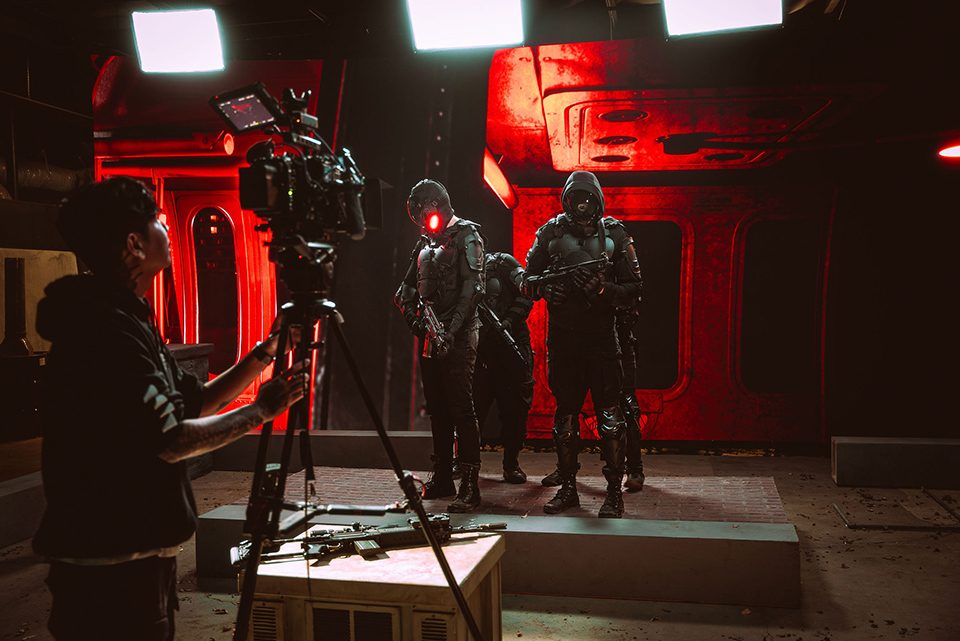
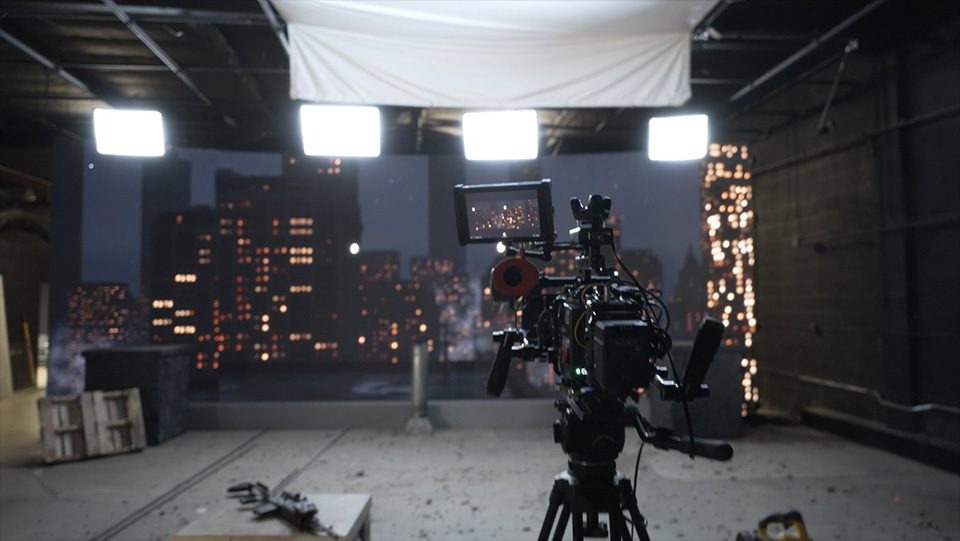
Every scene is boarded and broken down shot by shot — size, angle, rig, movement, and audio source — with priority flags separating the must-get frames from standard coverage.
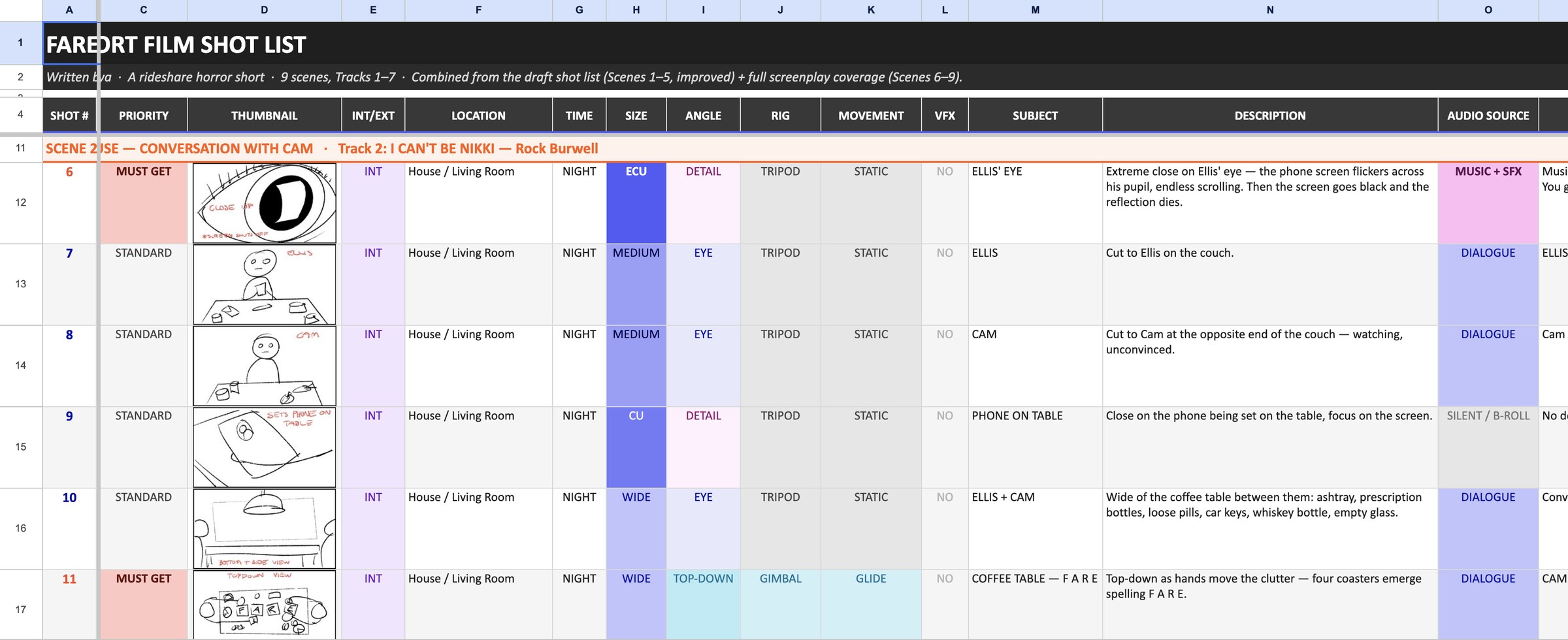
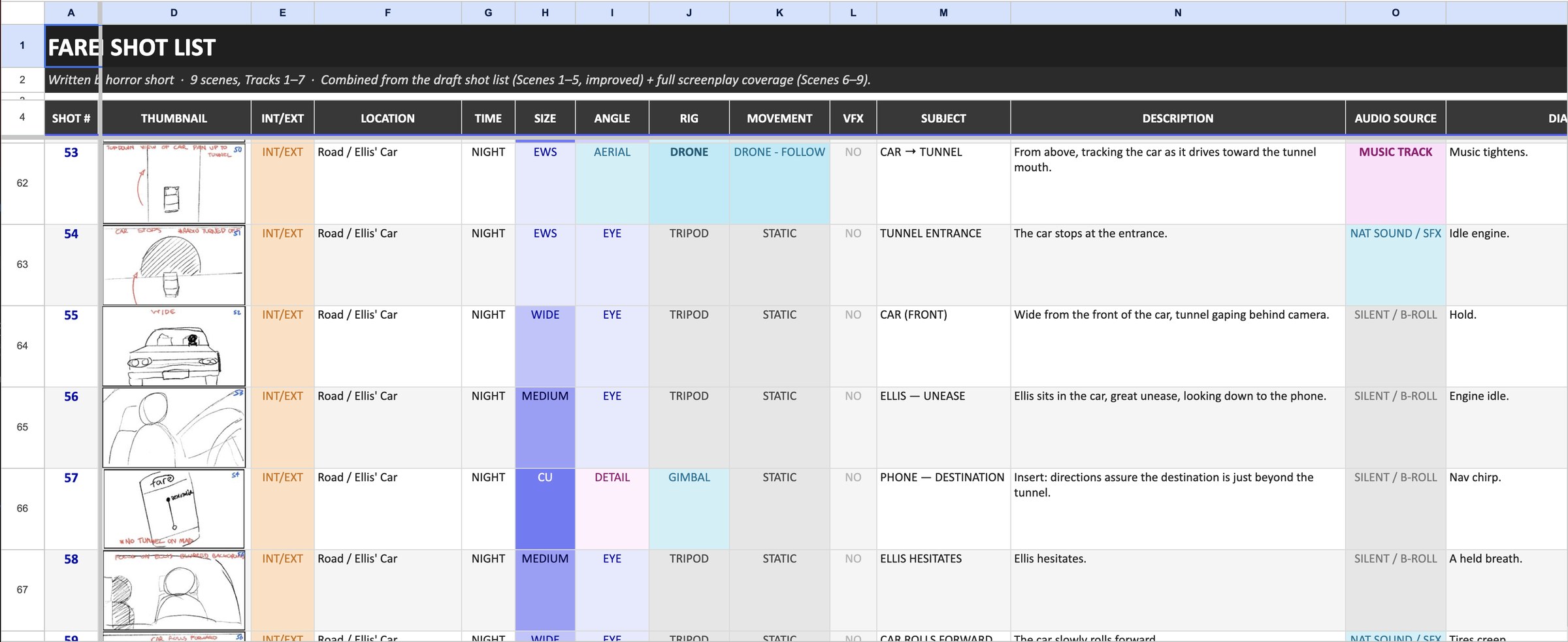
From the working shot list — every setup broken down by size, angle, rig, movement, and audio source, with priority flags for the must-get frames.
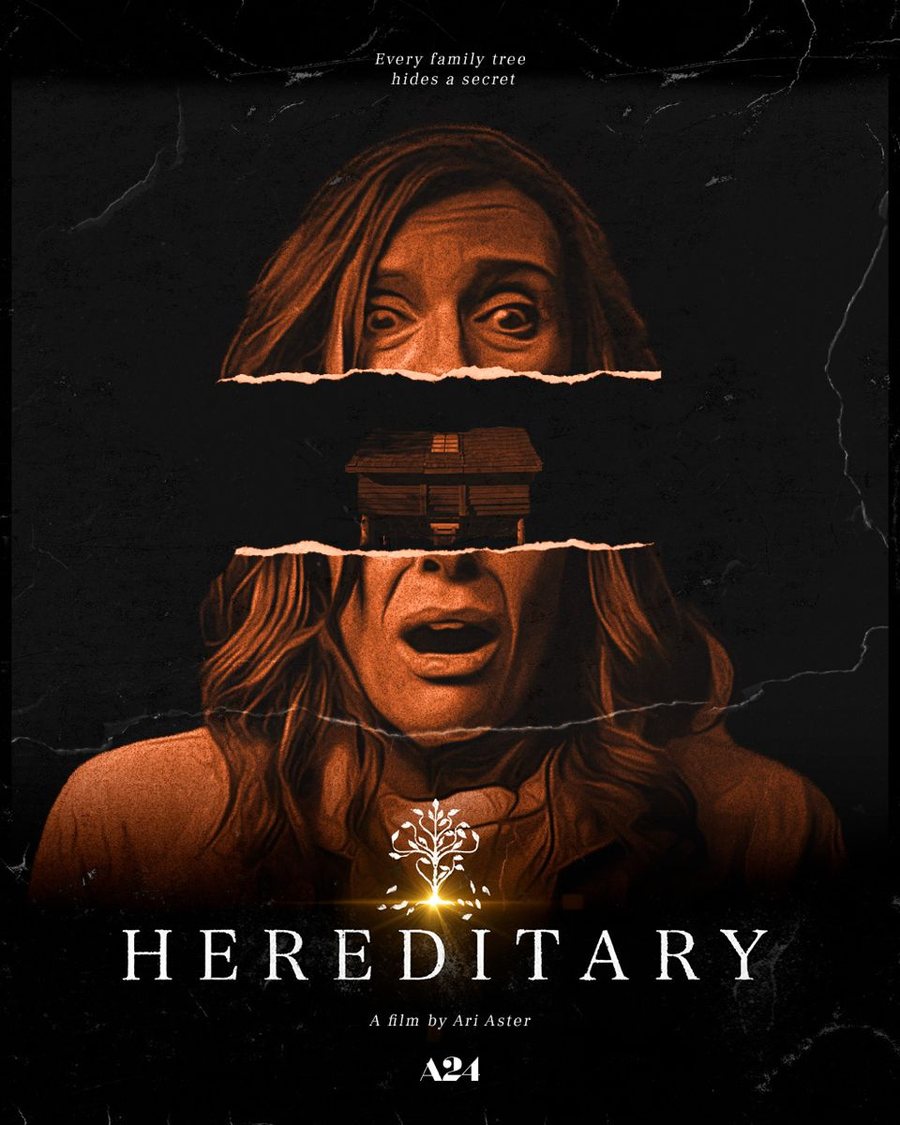
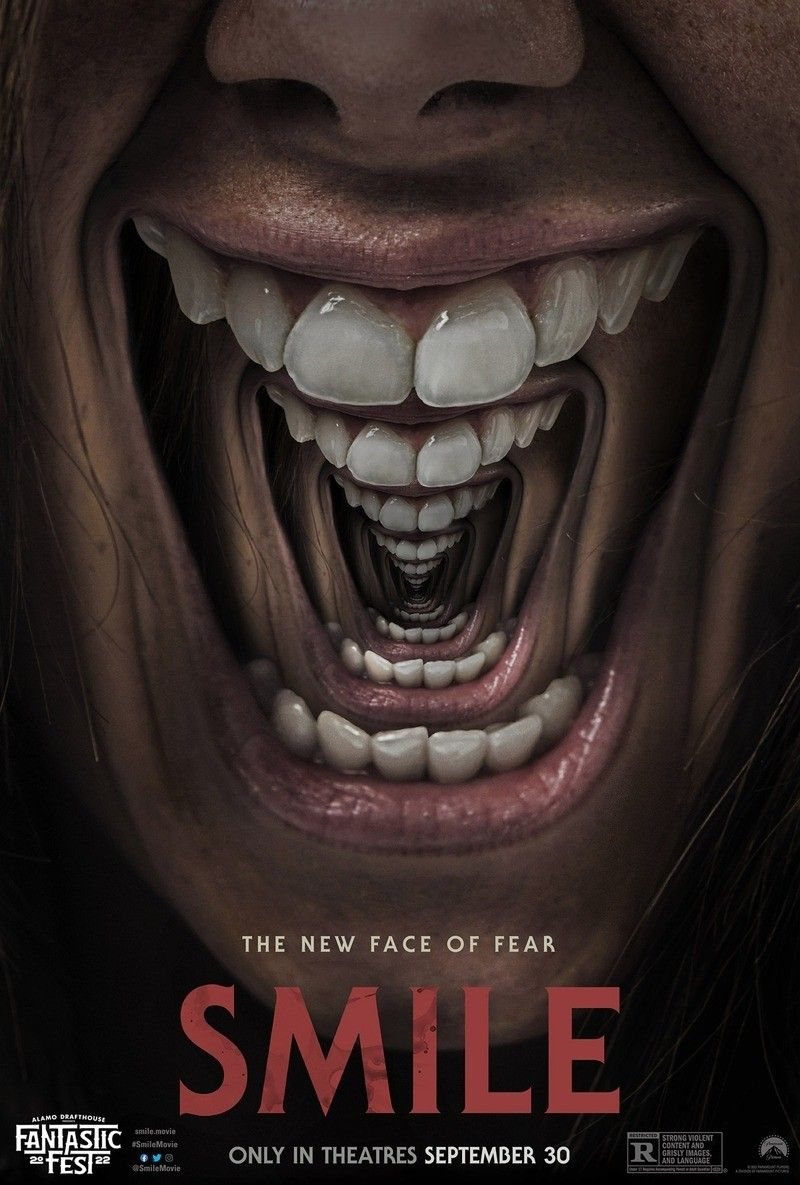
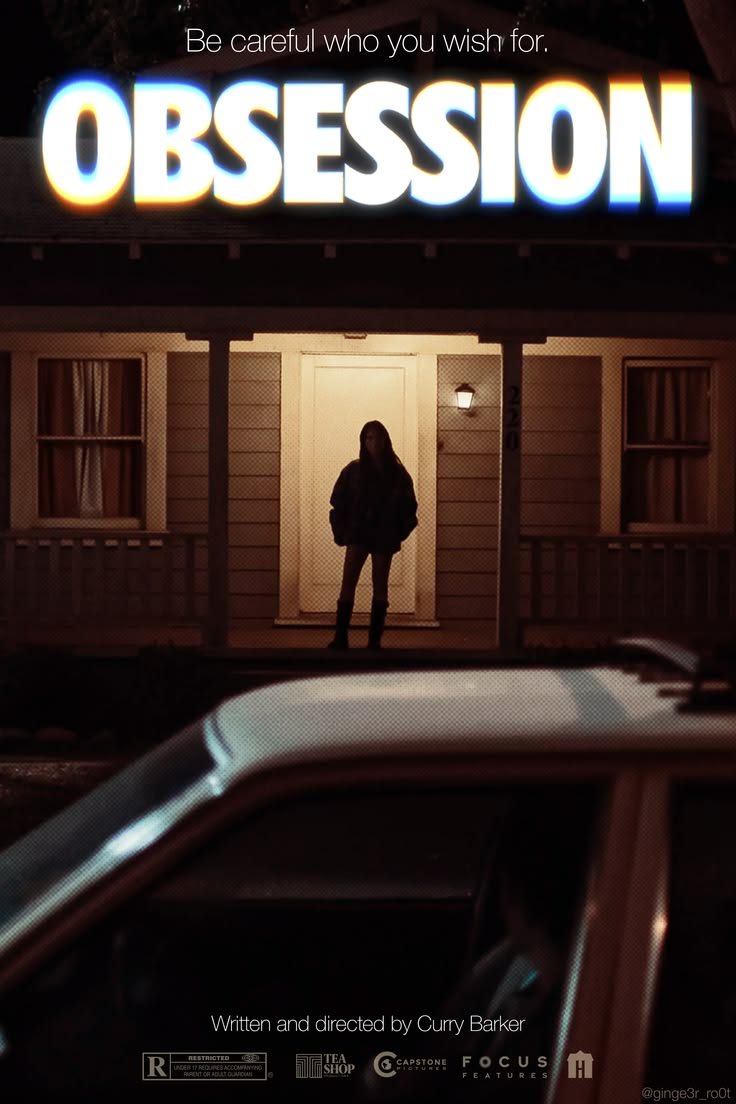
Elevated horror built on dread and image-making rather than jump scares — grief-logic, a smile that is wrong, and identity as the monster.